
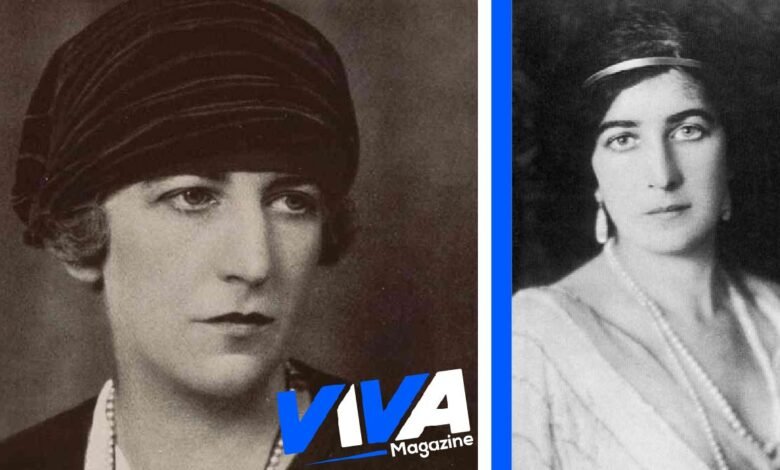
Venetia Stanley was not merely a society beauty of Edwardian England. She was a confidante whose words echoed through the corridors of 10 Downing Street during some of Britain’s darkest hours. Her enigmatic relationship with Prime Minister H.H. Asquith during World War I remains one of the most fascinating intersections of gender, politics, and influence in modern British history. Born into aristocracy, Venetia Stanley wielded soft power that influenced decisions at the highest level—despite holding no official title, political position, or even voting rights. This article delves into her remarkable life story, from her privileged upbringing and rebellious intellectual circles to the deeply personal correspondence that nearly rewrote the conduct of wartime governance.
Quick Facts Table
| Fact | Details |
|---|---|
| Full Name | Venetia Montagu (née Venetia Stanley) |
| Birth | August 1887, Alderley Park, Cheshire, England |
| Death | August 3, 1948, London, England (aged 60) |
| Family Background | Daughter of Edward Stanley, 4th Baron Stanley of Alderley |
| Notable For | Confidential wartime correspondence with PM H.H. Asquith |
| Social Circle | Member of the Coterie (Edwardian aristocratic counterculture) |
| Political Influence | Advised Asquith during WWI via 560+ personal letters |
| Marriage | Married Edwin Samuel Montagu (1915), converted to Judaism |
| Children | One daughter: Judith Montagu (born 1923) |
| Known For | Intimate insight into British wartime politics, emotional advisor to PM |
| Legacy | Seen as a symbol of informal female political power and emotional influence |
Aristocratic Foundations and Early Life
Venetia Stanley was born in 1887 into one of Britain’s grand aristocratic families. Her father, Lord Stanley of Alderley, descended from the Barons Sheffield, and her mother came from the Cavendish lineage—powerful, intellectual, and socially respected. She grew up at Alderley Park, a lavish estate where exotic pets like parrots and lemurs roamed the halls and gardens. This opulent and unconventional environment deeply shaped her character. From an early age, Venetia rejected the strict expectations society placed upon women of her class. Rather than following the quiet debutante script, she preferred spirited debate, outdoor adventure, and reading voraciously. Her siblings often described her as both emotionally aloof and intellectually fiery. This duality—intimacy combined with distance—would define her future relationships, particularly with the men who fell under her spell. Her unique upbringing positioned her as someone unafraid to challenge tradition, making her a natural magnet for Britain’s emerging social rebels.
The Coterie and Edwardian Rebellion
In her late teens and early twenties, Venetia Stanley became a prominent member of “The Coterie”—a group of avant-garde aristocrats, writers, and reform-minded thinkers. They were successors to the “Souls,” a previous generation of intellectual elites, but with a modern, politically rebellious twist. Where the Souls embraced subtlety and beauty, the Coterie embraced open criticism of Victorian norms. They challenged the era’s social restrictions, gender roles, and imperial assumptions. For Venetia, this intellectual freedom was intoxicating. Within the Coterie, she found people who valued her opinion, wit, and philosophical musings. This group was deeply involved in pre-war politics, artistic movements, and cultural reshaping of British identity. It was in this heady, fast-moving intellectual circle that she solidified her identity—not as a supporting figure, but as a woman who could influence men of power. Her involvement here positioned her to enter the inner circle of the most powerful man in Britain—Prime Minister H.H. Asquith.
Meeting H.H. Asquith – The Prime Minister’s Obsession
Venetia Stanley’s path crossed with Asquith’s through his daughter, Violet Asquith. What began as a casual friendship quickly became an emotionally charged relationship. Asquith was 35 years older than Venetia—a shocking age gap even in Edwardian England. The relationship provoked discomfort in political and social circles alike. Yet, it was not simply a romantic attraction. Asquith saw Venetia as his intellectual equal. He poured his heart into their correspondence, often writing several times a day, seeking her judgment on political issues and emotional matters. His wife, Margot Asquith, was deeply resentful and suspicious of Venetia’s presence. Violet Asquith, too, grew increasingly possessive and conflicted. Edwin Montagu, another admirer of Venetia, became part of this fraught triangle, proposing to her multiple times while watching her consume the Prime Minister’s thoughts. In this swirl of obsession, rivalry, and emotional dependency, Venetia Stanley remained calmly at the center—never revealing her hand completely, yet always exerting influence.
The Letters That Changed History
Between 1910 and 1915, Prime Minister Asquith wrote more than 560 letters to Venetia Stanley—amounting to over 300,000 words. These were not simply romantic musings or idle chatter. These letters contained confidential cabinet decisions, military discussions, and deep personal doubts during the First World War. Venetia became Asquith’s sounding board, conscience, and secret political adviser. Through his words, historians gain rare insight into wartime leadership, cabinet fractures, and psychological stress under national crisis. At the time, this correspondence breached every expectation of political protocol. A young woman with no official position had the Prime Minister’s ear on matters of national survival. These letters, only published decades later, stunned scholars with their depth, scope, and intimacy. They reflect not only Asquith’s vulnerabilities but also Venetia’s steady, rational presence. Her responses—often curt, reasoned, and sometimes cold—gave her an unusual kind of power: the ability to shape British wartime strategy without a single vote or press conference.
Gender, Influence, and Power Without Office
Venetia Stanley’s role during World War I offers a compelling case of soft power in a male-dominated society. At a time when women had no parliamentary rights and barely any public voice, Venetia was indirectly guiding one of the world’s most powerful men. She offered more than flattery or companionship—she offered judgment, strategy, and psychological balance. Her relationship with Asquith blurred the lines between private influence and public governance. While suffragettes protested in the streets, Venetia used private letters to steer debates inside Downing Street. Unlike political wives or First Ladies, she held no ceremonial function. Yet her influence ran deeper. Historians now acknowledge her role as akin to that of an unelected adviser. This quiet, informal form of power, exercised through intellect and emotional leverage, offers an alternative model of female agency before formal political inclusion.
The Scandalous Web Around Venetia and Violet
Venetia Stanley’s relationship with Violet Asquith was complex, intense, and at times, potentially romantic. Their letters, though never explicitly passionate, contain deep emotional undertones. Violet idolized Venetia, often hinting at jealousy and longing. As their bond deepened, Violet’s possessiveness grew—especially when Venetia became close to her father. The emotional triangle between Violet, Venetia, and H.H. Asquith blurred familial boundaries. The situation peaked during a retreat to Slains Castle, where tensions led to a rumored suicidal gesture by Violet. Gossip, secrecy, and psychological strain defined this phase of Venetia’s life. These incidents provide a window into the deeply intertwined emotional and political lives of Britain’s elite. In a world governed by appearances, the raw emotions behind closed doors often dictated decisions of national significance. Venetia stood at the center of this drama—sought after, misunderstood, and envied in equal measure.
FAQs About Venetia Stanley
Who was Venetia Stanley?
Venetia Stanley was an aristocratic socialite and key confidante of British PM H.H. Asquith during WWI.
How did Venetia Stanley influence H.H. Asquith?
Through 560+ letters, she became a political adviser and emotional anchor during his wartime leadership.
Did Venetia Stanley marry?
Yes, she married Edwin Montagu in 1915 after converting to Judaism. Their marriage was unconventional and possibly celibate.
What was the controversy about her relationship with Asquith?
Asquith shared classified government decisions with her, raising ethical concerns about her private influence on public affairs.
What is her legacy today?
Venetia Stanley is now seen as a symbol of female power without formal office—her letters reshaped political history.
Also Read :
Royce Renee Woods: Athlete, Coach & Sports Mentor
Darwin Thomas Meprethu: Engineer & Skilled Migrant Advocate
Visit For More Info : Viva Magazine