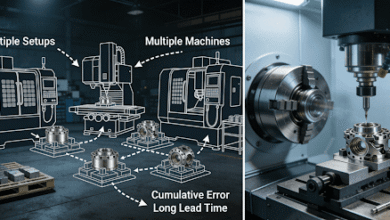
How to Choose a Reliable Online CNC Machining Service: A 5-Dimensional Framework to Avoid 40% Delays and Cost Overruns

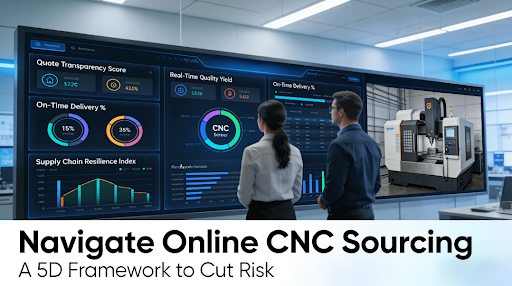
- File name: navigate-online-cnc-sourcing-5d-framework-hero.jpg
Introduction
In today’s push for supply chain efficiency, procurement managers and engineers are increasingly turning to online CNC machining services. Yet, the promise of convenience is often overshadowed by harsh realities: “instant quotes” based on vague assumptions lead to staggering cost overruns; guarantees of “fast delivery” crumble under weak supply chains, causing weeks of delay; and the unverifiable “precision” of an online model can result in entire batches of non-conforming parts, derailing project timelines and budgets. The move to digital procurement, without proper vetting, introduces immense financial and operational risk.
The core failure is a superficial evaluation. Most assessments stop at a slick website interface and initial quote speed, lacking a systematic framework to probe a supplier’s underlying digital manufacturing capabilities, manufacturing automation level, and quality control systems. Basing critical production outsourcing on the fragile promise of “online convenience” is a high-stakes gamble. This article provides a proven, five-dimensional assessment framework. It cuts through marketing to evaluate an online CNC service on the core pillars of “technical algorithm depth,” “quality transparency,” “operational resilience,” “cost clarity,” and “collaborative scalability,” transforming digital sourcing risk into a competitive advantage.
What Makes an “Instant Quote” Truly Reliable Beyond Just Speed?
An instant quote is only as trustworthy as the sophisticated manufacturing intelligence behind it. True reliability stems from algorithmic depth, not just calculation speed. A basic quote that multiplies part volume by material cost is dangerously simplistic. A robust Instant Quote CNC Machining engine functions as a digital twin, simulating the entire manufacturing process. It uses a geometry parsing engine to automatically identify complex features like deep cavities, thin walls, and tight tolerances, then matches them with appropriate machining strategies and tooling. This pre-emptive analysis provides a realistic cost and timeline foundation, flagging potential manufacturability issues before an order is placed.
1. The Engine Behind the Estimate: AI and Manufacturing Knowledge
The sophistication of the quoting process directly determines the accuracy of the final result. Advanced systems leverage AI-driven cost modeling technologies — drawing upon data from thousands of historical projects — to precisely predict machining times, tool wear, and fixturing requirements for complex geometric structures. To understand the essential elements of a comprehensive and reliable quoting system, please refer to this in-depth guide on online CNC machining services.
2. Transparency as the True Indicator of Trust
Therefore, the value of an instant quote lies not in its speed, but in its explanatory power. A trustworthy platform will present a clear cost breakdown — separating material, machining, setup, and finishing costs — and be transparent about its assumptions. It will state that the quote is a highly accurate estimate pending a final engineering review upon file submission. This level of cost transparency and process clarity is the first and most critical filter for separating advanced digital manufacturing partners from simplistic, high-risk order portals.
How to Evaluate “Precision” and “Reliability” in a Fully Online Service Model?
In an online model, quality assurance cannot rely on physical oversight; it must be enforced through data transparency and systematic process control. Evaluating a custom CNC machining service requires shifting the paradigm from “trust” to “verified proof”. The benchmark moves from a handshake to a digitally verifiable quality record. This means demanding access to real-time production data, comprehensive inspection reports, and evidence of a deeply ingrained quality management system that functions reliably without your physical presence, ensuring every part meets specification, every time.
- The Pillars of Remote Quality Assurance: Reliability is built on three pillars of digital proof. First, real-time monitoring and data access — does the supplier provide photos or videos of key setup and machining stages? Second, digital First Article Inspection (FAI) reports — is a full-dimensional CMM report with actual measured data provided, traceable to NIST standards? Third, statistical process control (SPC) — can the supplier demonstrate process capability (Cp/Cpk) for critical dimensions? These elements transform quality from a promise into a continuously auditable data stream.
- The Critical Role of Certifications and Culture: Certifications like IATF 16949 or AS9100D are not just badges; they are proxies for a culture of prevention. These standards mandate rigorous process controls, root cause analysis, and continuous improvement — systems designed to prevent errors before they occur. A certified supplier has audited procedures for everything from equipment calibration to operator training, creating a foundation of inherent reliability. In an online context, this systemic approach is your greatest assurance that the parts arriving at your door will conform to your digital model, even from thousands of miles away.
- Achieving Certainty in a Digital Transaction: Thus, precision in an online model is a function of information accessibility. The ability to remotely specify your inspection criteria, receive corresponding traceable data, and audit a supplier’s controlled processes via their quality certifications replaces the need for an on-site visit. This data-driven transparency is the cornerstone of a trustworthy online business partnership, allowing you to manage quality as effectively as if you were on the shop floor, turning a potential weakness of the online model into its greatest strength.
When Speed is Critical, How to Decode “Fast Delivery” Promises?
“Fast delivery” is an output, not an input. Its reliability is determined by the underlying operational infrastructure that supports it. A credible Fast CNC Machining Service is built on controlled capacity, strategic inventory, and integrated processes, not just optimistic promises. The key is to distinguish between a marketing claim and a repeatable, system-driven outcome based on robust engineering and logistics. Speed without consistency is merely haste, leading to the delays and quality issues procurement seeks to avoid.
1. Anatomy of a Predictable Lead Time
Three factors primarily dictate reliable speed. First, internal capacity versus outsourcing dependency: A service with owned manufacturing facilities and advanced production scheduling software has far more control than a platform that simply brokers orders to a dispersed, unvetted network. Second, raw material inventory strategy: For common materials like 6061 aluminum or 304 stainless steel, does the supplier maintain safety stock to buffer against supply chain volatility? Third, integrated post-processing: Are finishing services like anodizing or heat treating performed in-house? External subcontracting adds logistical complexity and communication lag, which are the primary killers of promised timelines.
2. The Foundation of ISO 9001 in Delivery Reliability
Certifications like ISO 9001 provide the framework for predictable execution. This standard mandates documented procedures for order review, production planning, and purchasing control. A certified supplier doesn’t just hope to deliver on time; they have a managed system to ensure it. They qualify their sub-suppliers, monitor on-time performance, and have contingency plans. This systematic approach to supply chain management minimizes surprises and provides a structural reason to believe their fast delivery promise is more than just an aspiration.
3. Building a Partnership for Agile Response
Therefore, evaluating delivery speed is an evaluation of operational maturity. It requires asking not just “How fast?” but “How?” and “How consistently?” A partner that can articulate their capacity planning, inventory management, and process integration demonstrates the operational discipline required for reliable speed. This makes them a true extension of your own lean and agile supply chain, capable of supporting rapid prototyping and responding to urgent production needs without compromising on the other pillars of quality and cost.
Beyond Price: What Hidden Costs Should You Scrutinize in an Online Quote?
The true cost of an online machining project is revealed not in the headline price, but in the granular breakdown of what is — and crucially, is not — included. A disciplined audit of a CNC Machining Cost Online quote is essential to avoid budget overruns that can erase the perceived savings of digital sourcing. Transparent suppliers will detail all cost drivers, allowing for an apples-to-apples comparison and informed decision-making. The goal is to achieve total cost clarity before commitment, turning the quote from a simple price into a comprehensive project plan.
1. Deconstructing the Cost Drivers
Beyond material and machine time, several factors can significantly impact the final invoice. Engineering and programming fees for complex, multi-axis parts are a legitimate and substantial cost that may be buried or omitted. The expense for custom fixtures and workholding designed to secure intricate geometries without damage is often overlooked. First-article inspection and reporting fees for full CMM validation are critical for quality assurance but may be an add-on. Additionally, minimum order quantities (MOQs) and specialized packaging/shipping costs for delicate parts can create unexpected charges that distort the per-part cost calculation.
2. The Strategic Value of a Transparent Breakdown
A detailed quote is a tool for collaboration and value engineering. When costs are itemized, it creates an opportunity for dialogue. You can ask: “Can we modify this feature to reduce programming complexity?” or “Is there a standard fixture that could work?” This collaborative Design for Manufacturability (DFM) discussion, enabled by transparency, is where significant cost optimization occurs. It aligns the supplier’s expertise with your budget goals, fostering a partnership aimed at achieving the best value, not just the lowest initial price.
3. Implementing a Proactive Cost Audit
Consequently, the most critical step in cost control happens before the purchase order. Demand a line-item breakdown from every potential supplier. Use this to compare not just the bottom line, but the structure and assumptions behind each cost element. This practice shifts the procurement focus from price shopping to value analysis. It allows you to identify partners who are investing in robust engineering and quality processes — investments that prevent costly errors — versus those who achieve a low price by cutting corners that will lead to expense and delay later in the project.
From Prototype to Production: Can One Online Platform Seamlessly Scale with Your Needs?
The ultimate test of an online manufacturing partner is not handling a single prototype, but providing a seamless, scalable pathway from initial concept through to sustainable production. A service excelling in Online CNC Prototyping Service must also demonstrate the systems, capacity, and consistency to support growth. This requires evaluating their capability for process repeatability, collaborative project management, and operational maturity that ensures the 1000th part is identical to the first, and that communication remains clear as order volumes increase tenfold.
1. Ensuring Consistency from Prototype to Production Run
Scalability hinges on process fidelity. The prototype phase should validate not only the design but the manufacturing process itself. A superior partner will use the same machines, materials, and fixturing strategies for both prototype and production, ensuring performance and aesthetic consistency. They should have a documented process control system (a core tenet of ISO 9001) that locks in these parameters. This prevents the common and costly scenario where a perfect prototype cannot be replicated at scale due to process changes or supplier switches.
2. Tools for Collaborative Growth
Effective scaling requires more than just machine capacity; it requires collaborative infrastructure. Evaluate the platform’s project management and communication tools. Do they offer a shared digital workspace for managing revision-controlled drawings, engineering queries (RFIs), and quality documentation? This centralized, transparent system is vital for managing the increased complexity of production orders, preventing errors, and maintaining alignment as your project evolves from a one-off to an ongoing program.
3. Building a Partnership for Long-Term Innovation
Therefore, selecting an online manufacturing partner is a strategic decision with long-term implications. A partner that offers seamless scalability does more than fill orders; they become an extension of your research and development and production teams. Furthermore, a commitment to sustainable manufacturing, evidenced by certifications like ISO 14001, adds value to your own brand and aligns with modern corporate responsibility goals. This forward-looking, partnership-based approach transforms a transactional service into a driver of sustained industrial innovation and competitive advantage.
Conclusion
In the era of digital manufacturing, choosing an online CNC service is not merely about selecting a vendor; it is about architecting an extension of your own digital manufacturing capability. By systematically evaluating partners across the five dimensions of technical depth, quality transparency, operational resilience, cost intelligence, and collaborative scalability, businesses can transform an external supply chain into a core component of their agility, innovation, and reliable delivery. This disciplined framework moves the decision beyond superficial convenience, building a foundation for growth that is as precise and reliable as the parts the partnership will create.
FAQs
Q: An “instant quote” seems too good to be true. How accurate can it really be?
A: The accuracy hinges on the sophistication of the backend system. A reliable instant quote engine uses a digital twin simulation that factors in geometry complexity, setup, and tooling, not just volume. It should provide a detailed breakdown and be clear that it’s an estimate pending final engineering review. Transparency in the quoting logic is the true indicator of reliability, not just the speed of the number generated.
Q: We only need a few prototype parts. Is it worth going through such a thorough evaluation process?
A: Absolutely, even for prototypes. A focused evaluation on DFM feedback quality and communication is crucial. The goal is to avoid wasting time and budget on parts that fail to validate your design. A supplier who provides constructive manufacturability advice during quoting is invaluable, as is their ability to deliver the material certifications and inspection reports you need for your testing phase, ensuring the prototype serves its purpose.
Q: How can we ensure quality control when we never visit the factory in an online model?
A: Quality is enforced through data and documented systems, not physical presence. Require digital proof: comprehensive First Article Inspection (FAI) reports with actual measurements, material certificates, and process documentation. Suppliers with certifications like IATF 16949 have audited, systemic quality controls. Your ability to specify and receive traceable inspection data is the cornerstone of trust in an online model.
Q: Our designs are highly confidential. How do online platforms protect intellectual property (IP)?
A: Reputable platforms should have a robust IP protection protocol: a mandatory Non-Disclosure Agreement (NDA), secure encrypted file transfer (e.g., SSL/TLS), strict internal data access controls, and a clear data retention/deletion policy. Inquire directly about their security measures. Platforms serving regulated industries like aerospace or defense typically have the most stringent, audited information security management systems in place.
Q: What happens if there is a problem with the parts after delivery in an online transaction?
A: A clear corrective action process is essential. Before ordering, understand the supplier’s policy for non-conforming parts. How are issues reported and investigated? Will they re-make or refund? Suppliers with a certified quality management system (e.g., ISO 9001) are required to have a formal, documented process for handling such situations, ensuring a fair and systematic resolution, which is a key marker of long-term reliability.
Author Bio
This article is authored by supply chain and digital manufacturing specialists with extensive experience in de-risking and optimizing outsourced production for global enterprises. For teams seeking to build a transparent, reliable, and scalable digital manufacturing partnership, a disciplined evaluation based on technical capability and process integrity is the critical first step. LS Manufacturing is a certified precision manufacturing partner that embodies this integrated approach, combining IATF 16949 and AS9100D certified quality systems with advanced digital infrastructure to deliver predictable, high-quality outcomes for prototypes and production runs alike.