
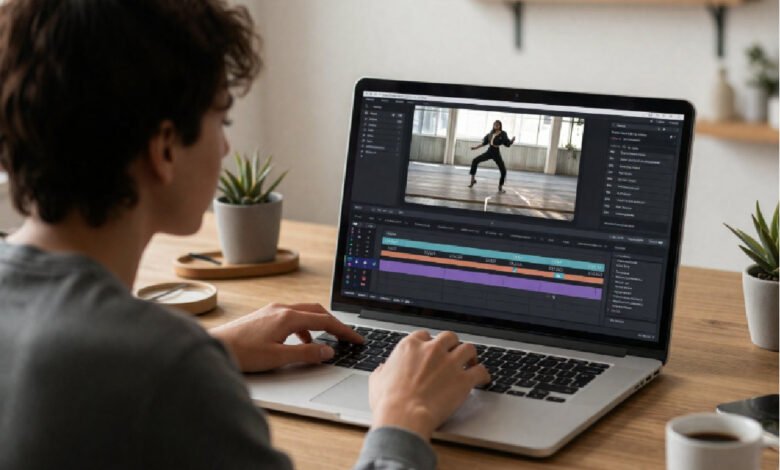
Lately, when I scroll through social platforms, I keep seeing the same kind of moment appear in different forms. A still portrait suddenly sways with a little rhythm. A character image becomes a dance clip. An old photo that looked ordinary a second ago suddenly feels personal again because it moves just enough to catch the eye.
I do not think this is happening by accident. Static content still matters, of course, but it no longer stops people in the same way it used to. What seems to work now is movement with very little friction attached to it. It does not need to look cinematic. It just needs to feel alive. That is why AI dance videos have become so visible in everyday feeds: they communicate instantly, even before the viewer understands how they were made.
What fascinates me is that the strongest examples are rarely the most complicated ones. In many cases, the appeal comes from something much simpler — a familiar face, a touch of rhythm, a small emotional shift, and a sense that the image is no longer frozen.
Static content no longer holds attention the same way it used to
The average user sees too much visual content in a single day. Under that kind of pressure, even a beautiful static image can vanish into the scroll. I have noticed this in my own tests: a good still image may earn appreciation, but a lightly animated one earns curiosity.
That difference matters. Curiosity buys an extra second. An extra second often buys the click, the replay, or the share.
What makes this especially interesting is that the motion does not have to be dramatic. In fact, exaggerated effects often make the content feel less human. A small head turn, a gentle sway, a rhythmic body movement, or a slight facial shift can do more than an overload of flashy animation.
Why AI dance videos feel instantly watchable
Part of the appeal is how easy dance content is to read. The viewer does not need context. They do not need a long caption. They see a subject, they see movement, and they understand the point almost immediately.
That is one reason I think AI dance clips travel so easily online. Dance already has a built-in structure: rhythm, body language, repetition, and expression. Even when the source is simple, the final result often feels more dynamic than a standard portrait or slideshow-style visual.
In my own experience, dance-style AI visuals tend to work well for:
| Content type | Why it performs |
| character edits | movement adds personality fast |
| casual social posts | easy to understand at a glance |
| entertainment content | naturally replayable |
| visual experiments | low barrier, high visual payoff |
There is also something psychologically direct about them. A dance clip does not ask the viewer to decode too much. It offers a fast emotional read, and that makes it especially suited to crowded feeds.
The emotional pull of photo animation
The same principle explains why photo animation has stayed popular beyond its first wave of novelty. When a still photo begins to move, even very slightly, the emotional temperature changes.
I noticed this most clearly with portraits and pet photos. A static image is already meaningful if the subject matters to you. Add a little motion — a subtle expression, a soft shift, a natural pause — and the image starts to feel present rather than archived.
That is a surprisingly powerful change.
For many people, this is not really about special effects. It is about recovering a feeling from an image that already mattered. A photo that moves a little often feels less like content and more like a memory re-entering the room.
The best AI motion content is usually simple
Whenever this format starts to feel overhyped, I remind myself that the strongest examples are usually the quietest ones. The clips that stay with me are not the ones packed with extreme motion. They are the ones that preserve the original image’s mood while adding just enough life to make it breathe.
That is true across most of the better outputs I have seen. Simplicity helps in at least three ways:
- it keeps the subject recognisable
- it avoids visual strain
- it makes the content easier to share without feeling embarrassing or overproduced
I think this is why some AI visuals succeed while others feel disposable. The successful ones respect the source image. They do not try to turn every photo into a spectacle.
Why this format is likely to stay
I do not see this as a passing trick anymore. The barrier to entry is too low, the output is too shareable, and the emotional response is too immediate.
Movement used to require more tools, more editing knowledge, and more time. Now it often begins with one image and a clear intent. That shift changes who gets to participate. It opens the door for casual users, small creators, niche communities, and people who are not trying to become video editors in the first place.
That is why this format keeps showing up. It fits the way people communicate now: quickly, visually, emotionally, and with just enough motion to make the familiar feel new again.